How to Use a Salad Spinner Properly in 5 Simple Steps
Ever dress a salad and watch the dressing slide off like it’s on a water slide? Then you’re stuck with limp leaves and a puddle at the bottom of the bowl.
That’s exactly what a salad spinner fixes. It doesn’t just “kind of dry” your greens - it flings the water off fast. So, dressing actually sticks, salads stay crisp, and leftovers don’t turn into a soggy mess overnight.
In this guide, you’ll learn how to use a salad spinner step-by-step, including a common step most people skip. You’ll be spinning like a pro in two minutes.
What a Salad Spinner Is (And Why It Works)
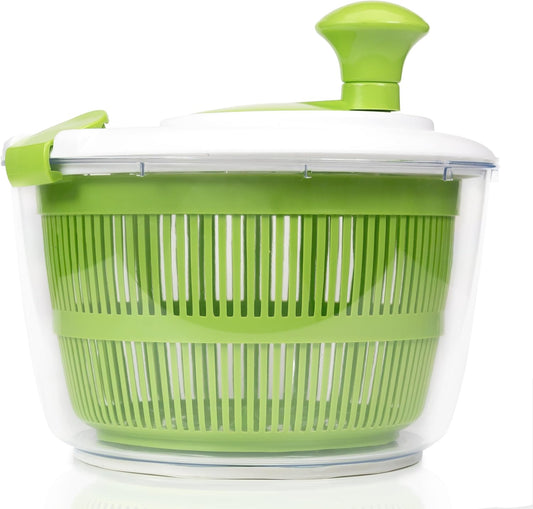
A salad spinner is basically a colander inside a bowl with a lid that spins. You put your washed greens in the inner basket, lock the lid, and spin. The basket whips around and throws water off the leaves into the outer bowl.
And drying matters way more than people think. Dressing clings to dry leaves, so your salad tastes like salad, not watered-down vinaigrette. Wet greens also go limp faster, and they don’t keep well in the fridge. Less leftover moisture = crisper texture now, and better leftovers later.
Salad Spinner Parts (And What Each One Does)
Once you know what each piece is supposed to do, using a salad spinner gets way easier. It also makes troubleshooting simple, as most problems come from one part not sitting right.
Basket: This is where the greens go. The holes let water fly out when you spin, while the leaves stay inside. If you overfill it, it can’t spin freely - so everything stays damp.
Outer bowl: This holds the basket and catches all the dirty wash water and spin-off water. Pro move: you’ll dump this water mid-way, so you’re not re-wetting your greens.
Lid: Locks everything in and connects the spinning motion to the basket. If the lid isn’t seated right, the spinner may wobble, slip, or not spin at all.
Spin mechanism: This is the part you control, usually one of these:
- Pump: You press up and down to spin faster
- Crank: You turn a handle to spin
- Pull-cord: You pull a cord to spin
Brake/stop button: Stops the basket quickly and prevents that annoying wobble at the end. Super handy when you’re spinning a full load.
How to Use a Salad Spinner in 5 Simple Steps
A salad spinner dries your washed greens fast, so your dressing actually sticks, and your salad stays crisp instead of watery. Here’s exactly how to use it in 5 simple steps.
Step 1: Don’t Overfill the Basket
Keep the greens loose, not packed. They need a little space so the basket can spin freely and the water can fly off.
If you cram the basket full, two things happen: it spins worse, and your greens come out still damp. When in doubt, do two smaller batches - it’s faster than fighting one heavy, soggy load.
Step 2: Wash the Smart Way (So the Dirt Sinks)
You’ve got two ways to wash greens: soak and swish or quick rinse. The first method is clearly better, as lettuce that comes from a garden or farmers' market can hide grit.
Soak and swish:
- Put your greens in the basket.
- Set the basket inside the outer bowl.
- Fill the bowl with cold water (enough to cover the greens).
- Swish gently with your hand for a few seconds.
The magic here is simple: the dirt gets knocked loose and sinks to the bottom, while the greens stay up in the basket. This is the move for spinach, leeks, and garden lettuce, anything that tends to carry sand.
Quick rinse: If your greens are pretty clean, a quick rinse under the tap is fine. Just know it’s less effective when you’re dealing with gritty leaves. This is because the dirt doesn’t always wash away - it just moves around.
Step 3: Lift the Basket and Dump the Dirty Water
Now lift the basket out of the bowl and set it aside for a second. You’ll see the dirt (and sometimes tiny bits of grit) sitting in the water you just knocked loose.
Pour that dirty water out of the outer bowl. If you noticed sand or grit, don’t overthink it - just do a second quick soak + swish the same way as Step 2. It takes 20 seconds and saves you from biting into a crunchy surprise.
Step 4: Spin To Dry
Put the basket back into the bowl, then pop the lid on (lock it if your model has a lock). Now spin.
Aim for 10-30 seconds, depending on how full the basket is. A small handful of greens dries fast. A fuller load might need a bit longer. You’re looking for leaves that feel light and crisp, not heavy and clingy.
Step 5: Dump the water and spin again (the part people skip)
Here’s the part people skip: the water you just spun off is now sitting in the bowl. If you leave it there, your greens can end up damp again. This is especially true if the basket is touching the water or the leaves are still shedding droplets.
So do this:
- Take the lid off and lift the basket out for a second.
- Pour out the collected water from the outer bowl.
- Put the basket back, lid on, and spin one more time.
That second spin is what takes you from “pretty dry” to actual dry. This is the kind of dry where dressing sticks and your salad stays crisp.
Optional: The “Restaurant-Crisp” Finish (Pro Move)
If you want your salad to feel next-level crisp (the kind where the leaves snap instead of flop). Do one last tiny step after the second spin: let the greens breathe for a minute.
Spread them out in a thin layer on a clean kitchen towel (or a couple of paper towels) for 2-5 minutes. Don’t pile them up, as piles trap moisture. A thin layer lets those last little droplets disappear. So, the leaves stay light and dry instead of slowly sweating back into dampness.
Different Salad Spinner Types (And How To Use Yours)
Most salad spinners do the same job. The only difference is how they spin. Whatever style you have, the rule is the same: steady beats aggressive. Spinning too hard usually just makes it wobble, bruise leaves, or slip on the counter.
Pump-Style (Push Knob)
Pump spinners are the easiest: you press the knob a few times, and the basket builds speed on its own. The big mistake is going too hard too fast. Steady pumps keep it smooth and stop the wobble.
- Lock the lid in place.
- Pump the knob steadily to build speed.
- If the bowl shifts, keep one hand on the side to steady it.
- Use the brake/stop button (if you have one) to stop cleanly.
Crank-Style (Turn Handle)
Crank spinners give you more control, but they also tempt people to overdo it. You don’t need “maximum power.” A smooth, quick crank dries better than forcing it.
- Make sure the lid is seated and secure.
- Turn the handle smoothly and steadily.
- If it starts thumping or wobbling, slow down and rebalance the greens.
- Stop gently - don’t wrench the handle like you’re starting a lawnmower.
Pull-Cord Style (String Pull)
Pull-cord spinners work great, but only if the base stays planted. The trick is short, smooth pulls, not one massive yank that makes the whole thing skid.
- Place it on a stable surface and hold the base with your free hand.
- Pull the cord smoothly (short pulls work best).
- Repeat pulls until it’s spinning fast enough to dry the greens.
- Let it slow down naturally (or use the stop feature if yours has one).
Common Salad Spinner Mistakes (And the Quick Fixes)
If your greens are still wet, your spinner wobbles like crazy, or the lid keeps slipping… you’re not “bad at salad.” It’s usually one of these super common mistakes.
Overfilled Basket
If the greens are packed in tight, the basket can’t spin freely, and water gets stuck between the leaves. The fix is simple: split it into two smaller batches. You’ll get a smoother spin, better airflow between leaves, and greens that come out noticeably drier (usually faster, too).
You Didn’t Dump the Water in the Bowl Mid-Way
After the first spin, all that water you just removed is sitting in the outer bowl - right under the basket. If you leave it there, your greens can end up damp again. The fix: dump the bowl and spin a second time. Yes, you should dump the water. This is the difference between “kind of dry” and actually dry.
Too Much Speed on Delicate Greens
Soft lettuces, herbs, and other fragile greens can bruise fast if you spin like you’re trying to launch them into orbit. The fix is to slow it down: use gentler spins, do a smaller load, and stop sooner. If you’re unsure, spin for a few seconds, check, then spin again.
The Lid Isn’t Seated or Locked Properly
If your spinner slips, rattles, wobbles, or “won’t spin,” the lid is often the culprit - even when everything else is fine. The fix: take the lid off, re-seat it carefully, and align any arrows, tabs, or locking marks. Also, wipe the rim dry (water can make it slide), then try again.
Storing It Damp or Soapy
Soap residue can make the lid or mechanism slippery, and leftover moisture trapped inside can lead to that musty “spinner smell” later. The fix is simple: rinse thoroughly until there’s no slick feel. After that, air-dry completely before putting it back together or storing it. Dry storage matters more than people think.
Quick Fixes When Your Salad Spinner Acts Weird
Most salad spinner problems aren’t “broken spinner” problems - they’re setup problems. Use these quick checks, and you’ll usually fix it in under a minute.
If it wobbles or thumps while spinning: Your load is uneven or too full. Remove some greens and redistribute what’s left so it’s balanced.
If it won’t spin at all: The lid probably isn’t seated, the lock is misengaged, or something is jammed. Re-seat the lid, make sure any lock tabs/markers line up, and check for trapped leaves around the rim/mechanism. A quick rinse can clear gunk.
If it squeaks or grinds: It usually just needs cleaning and drying. Wash it, rinse well, and let it fully air-dry before using again.
If your greens are still wet after spinning: You likely overfilled it or skipped the key move. Dump the bowl water and spin again, and if it’s still damp, do a smaller batch.
If it smells funky: Moisture is trapped somewhere (often the lid area). Deep clean, then air-dry completely before storing. If your lid is designed to come apart, check the manual and clean those hidden seams too.
Cleaning and Maintenance Tips for Salad Spinners
Most salad spinner issues (smells, slipping lids, weird squeaks) come down to basic cleaning and drying. Do the simple things below and you’ll avoid almost all of the annoying problems.
- Rinse the basket and bowl right away so bits don’t dry on. It takes 10 seconds and saves you from scrubbing later.
- If you spun greens with dressing residue, wash with warm soapy water so it doesn’t turn sticky.
- Don’t put the salad spinner away when it’s wet. Air-dry fully to prevent that musty smell later.
- The lid is where moisture and food can hide in seams. Wash it with warm soapy water, then rinse thoroughly.
- Some lids are designed to disassemble for deep cleaning. If yours does, take it apart occasionally to clean hidden spots.
- If your spinner traps moisture, store it with the lid off or slightly ajar, rather than sealed shut.
- Soak in warm, soapy water, then rinse the salad spinner. A quick vinegar-water rinse can help, but the real fix is drying it completely afterward.
Other Surprisingly Ways to Use a Salad Spinner
Once you’ve got a salad spinner, you’ll start using it for anything that needs to go from rinsed to actually dry fast. And when food is dry, it chops cleaner, stores longer, and cooks better.
Herbs (Cilantro, Parsley, Mint)
Rinse the bunch, shake it once, then drop it into the basket and give it a gentle spin. The spinner pulls water off the leaves so they don’t turn into a wet clump on your cutting board. Real-life win: dry cilantro first so it doesn’t clump when you chop; you get fluffy, clean cuts instead of mushy confetti.
Berries (Strawberries, Blueberries)
After rinsing, spin them lightly (short bursts, check in between). The spinner helps remove surface water so berries don’t sit wet in the fridge (wet berries spoil faster). Tip: Line the basket with a paper towel if the holes are big and you’re worried about smaller berries bouncing around.
Broccoli / Cauliflower (Before Roasting)
Wash florets, then spin them dry so you’re not throwing wet veggies onto a hot pan. Less water on the surface means they roast and brown instead of steaming. If you’ve ever had “soft, pale roasted broccoli,” it was probably too wet going in.
Canned Beans (For Salads)
Rinse beans in the basket, let them drain for a few seconds, then give them a quick spin. This knocks off that extra rinse water so your salad doesn’t get watered down. Real life win: spin beans so your salad doesn’t turn into bean soup at the bottom.
Shredded vegetables (slaws, fritters, pancakes):
Shredded cabbage, carrots, and zucchini hold a lot of water. A quick spin removes excess moisture so slaw stays crisp, and fritters/patties brown better instead of going soggy. If it’s super watery (like zucchini), squeeze first, then spin to finish.
Leeks (aka the “hidden sand” veggie):
Slice leeks, soak and swish them in water to loosen grit, then lift them into the basket and spin. Spinning helps shake off water and any lingering grit that’s clinging to the layers. You end up with clean leeks that won’t make your soup randomly crunchy.
10 Best Salad Spinner Brands to Use Properly for Cleaner, Fresher Salads
Discover the 10 best salad spinner brands that help you wash, dry, and prepare greens properly. From quick draining to crisp freshness, these trusted brands make salad prep cleaner, easier, and more efficient for everyday healthy meals.
| Brand Name | Amazon Product Model / Identifier | Best For | Features |
| OXO | 1155901 | Overall daily use | Large salad spinner, one-hand pump, BPA-free build, non-slip base, built-in brake. |
| Cuisinart | CTG-00-SAS | Washing and drying greens without removing lid | 5-quart capacity, easy-turn knob, top water opening, locking lid, non-skid base. |
| Farberware | 5318466 | Singles and couples | 3.16-quart compact spinner, pump mechanism, colander basket, non-slip base, built-in draining system. |
| Zyliss | E940017 | Large family salad prep | 6L capacity, Easy Spin 2 design, AquaVent basket, retractable pull cord, non-slip base. |
| KitchenAid | KQ308OSERA | Large-capacity kitchen use | 7.43-quart bowl, removable colander, one-handed pump, non-slip base, nesting design. |
| Prepworks by Progressive | CSS-3 | Space-saving storage | 4-quart collapsible design, spinner/drainer/colander function, compact storage-friendly build. |
| Westmark | 2430226B | Durable manual spinning | BPA-free polypropylene bowl, lid with spout, rubber-coated base, compact lid storage groove. |
| Gourmia | GSA9240 | Budget-friendly large salads | 5L jumbo salad spinner, manual crank handle, locking lid, BPA-free, top-rack dishwasher safe. |
| Excelsteel | 605 | Simple basic salad drying | 4.5-quart salad spinner, lightweight design, good for lettuce, herbs, and rinsed vegetables. |
| Joseph Joseph | 20154 | Multi-purpose salad prep | 4-piece set with salad spinner, spiralizer, slicer, grater, finger guard, compact storage. |
Frequently Asked Questions
Salad spinners are simple, but a few questions pop up all the time once you start using one. Here are the most common ones answered:
How long should you spin lettuce?
Usually 10-30 seconds, depending on how full the basket is. Then dump the bowl of water and spin again - that second spin is what makes it actually dry.
Do you wash lettuce in the basket or bowl?
Best method: put lettuce in the basket, then set it in the bowl and fill the bowl with water. Swish gently, dirt sinks to the bottom while greens stay up in the basket.
Can you use a salad spinner for fruit?
Yes, especially berries, but go gently. Do short spins and check often so you don’t bruise them.
Why won’t my salad spinner spin?
Most of the time, the lid isn’t seated/locked right, or a leaf is stuck near the rim/mechanism. Re-seat the lid, align any lock marks, and check for trapped bits.
Is a salad spinner worth it?
If you eat salads even a couple of times a week, it’s worth it. Dry greens taste better, dressing sticks, and you’ll waste less produce.
Can I dry pre-washed greens with it?
Yep. Even “ready-to-eat” greens can be damp in the bag - spinning them dry makes a huge difference for texture and dressing.
Final Thoughts
Now you know exactly how to use a salad spinner the right way. So, your salads stop coming out watery and sad. The whole method is simple: wash, dump, spin, dump, spin again. That’s the rhythm that gets greens truly dry, helps dressing stick, and keeps leftovers crisp longer.
Try it once, and you’ll never go back to towel-drying piles of lettuce. And if you’re shopping for a spinner, look for one with a stable base, an easy-clean lid, and a brake button. Those three things make it way nicer to use every week.