Exactly How Long to Microwave Water for Tea: Timing, Temperature, and Taste
You want a quick cup of tea. The kettle seems like too much work. So, you turn to your trusty microwave. It's fast, it's easy, and it's right there on your counter.
But then you wonder, is this the right way? Many tea lovers debate whether to use a microwave or a kettle for tea. Some say the microwave is a lifesaver, while others think it ruins the flavor.
The truth is, you can make a great cup of tea in the microwave. You just need to know the secrets. This guide will give you the perfect answer to how long to microwave water for tea. We will unveil every secret from safety to getting the best taste, so you can brew your tea with confidence.
What Determines How Long to Microwave Water for Tea?
Before we jump into exact times, let's talk about what changes the heating process. Not all microwaves are the same, and a few key things can change how long you need to wait.
- Microwave Power (Wattage): This is the biggest factor. A low-wattage microwave (under 800W) is slower, needing about 1.5 to 2 minutes. A high-wattage microwave (over 1000W) is much faster, usually taking only 1 to 1.5 minutes.
- Amount of Water: This one is simple. More water needs more time to get hot. A very large mug will need a few extra seconds.
- Starting Water Temperature: Cold water straight from the fridge will need more time to heat up than water that's already at room temperature.
The Great Debate: Microwave vs. Kettle for Tea

So, which is better for making tea? The microwave or the good old-fashioned kettle? Let's break down the pros and cons of each method. This will help you decide what is best for you and your cup of tea.
The biggest reason to use a microwave is simple. It's fast and super convenient. If you are in a hurry and just want a single cup, the microwave is your best friend. There's no need to wait for a whole kettle to boil.
However, the kettle has some major advantages. A kettle heats water very evenly. The heat comes from the bottom and creates a current, so all the water reaches the same temperature at the same time. This is called convection.
On the other hand, the microwave wins when it comes to pure ease and efficiency. You heat the water right in the mug you'll drink from, meaning there is less to wash afterward. You also only heat the exact amount of water you need, which saves both water and energy.
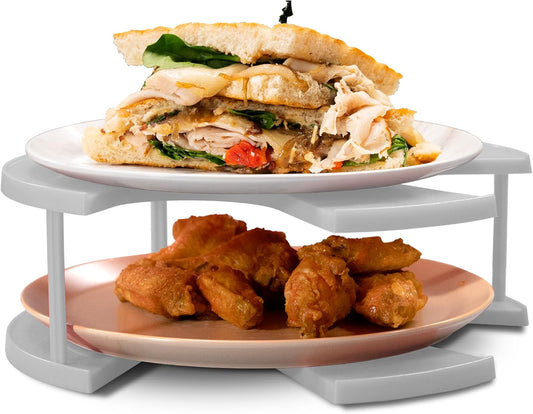
This efficiency is a lifesaver, especially when you're preparing a quick breakfast or afternoon snack. You can maximize that convenience by using a microwave stacking stand to heat a plate with a pastry or a bowl of oatmeal right above your mug of water. Everything gets hot in one go.
For a quick and easy cup without any fuss, the microwave is a clear winner in the microwave vs kettle for tea discussion.
How Long to Microwave One Cup of Water for Tea?
Microwave one cup of water for tea for about 1 to 2 minutes, depending on your microwave wattage and how hot you want the water. A standard 8-ounce cup usually reaches a good tea temperature in this range.
For most black tea, herbal tea, and chai, the water should be very hot, close to boiling. In a 1000-watt microwave, this may take around 90 seconds. Lower-wattage microwaves may need closer to 2 minutes.
For green tea or white tea, avoid fully boiling the water. These teas taste better with slightly cooler water, usually around 160°F to 185°F. Microwave the cup for about 60 to 90 seconds, then let it sit briefly before adding tea.
Use a microwave-safe mug and avoid overheating the water. Microwaved water can become extremely hot without visibly bubbling, so handle the cup carefully after heating.
The Scientific "Origin" of the Controversy: A Healthier Cup?

Interestingly, there's a scientific reason why some people are turning to the microwave. Back in 2012, a researcher named Professor Quan Vuong from the University of Newcastle in Australia did a study. His research brought microwaving tea water into the spotlight.
Professor Vuong's findings were quite surprising. His research suggested that microwaving could actually make a "healthier" cup of tea. He claimed that microwaving helps extract higher levels of beneficial compounds. These include things like polyphenols and theanine, which are good for you.
He thought this happened because microwaving heats the water very quickly. Even though it's not the same as how a kettle heats water (which is called convection), the rapid heating helps pull out these good things. Professor Vuong even recommended microwaving the tea, water, and bag together for about two to three minutes for the best results. This adds an interesting twist to our understanding of how long to microwave water for tea.
A Tea-by-Tea Guide to Microwave Timings and Temperatures
Now that you know the factors, let's get specific. Different teas have their own personalities and need to be treated in a special way to bring out their best flavors. This is because the leaves are processed differently. Using the right water temperature is the key to unlocking a truly tasty cup.
Black and Herbal Teas: The Robust Brews
Black tea leaves are fully oxidized. This means they've been exposed to the air, which turns them dark and makes their cell walls tough.
You need very hot, near-boiling water (around 208 to 212 degrees Fahrenheit) to properly break down these leaves and release their deep, malty, and rich flavors. Similarly, herbal infusions made from dried flowers, roots, and tough leaves need high heat to extract all their delicious essential oils.
- Examples: English Breakfast, Earl Grey, Chai, Peppermint, Chamomile.
- Microwave Time: To get your water this hot, aim for 2 to 3 minutes. You're looking for the water to be actively bubbling.
Green and White Teas: The Delicate Leaves
Green and white tea leaves are unoxidized or minimally oxidized. Their cell structures are very delicate and sensitive. Using water that's too hot will literally scorch them, releasing an excess of tannins, which causes that unpleasant, bitter, and grassy taste. You're not trying to force the flavor out; you're gently coaxing it.
Examples: Sencha, Jasmine Green, Silver Needle.
Microwave Time: The ideal temperature is much lower, around 175 to 185 degrees Fahrenheit. To achieve this, heat the water for just 1 to 2 minutes. Watch it closely and stop before it reaches a rolling boil.
Oolong Tea: The Complex Character
Oolong is the most interesting of the bunch because it's partially oxidized. It exists on a wide spectrum. Some oolongs are light and floral like a green tea, while others are dark and roasted like a black tea. This complexity is its superpower. A middle-ground temperature of about 195 degrees Fahrenheit is the sweet spot that unlocks its unique range of flavors without destroying the delicate notes.
Examples: Ti Kuan Yin (Iron Goddess of Mercy), Jin Xuan, Dong Ding Oolong
Microwave Time: To reach this ideal temperature, you should microwave your water for around 2 to 3 minutes. If you want to explore the amazing world of these brews, trying a high-quality oolong tea can truly change your tea-drinking experience.
How to Know When Microwaved Water Is Ready for Tea

Microwaved water is ready for tea when it is hot enough to release steam and small bubbles appear near the bottom or sides of the cup. For most teas, the water does not always need a strong rolling boil.
For black tea and herbal tea, the water should be near boiling. You may see steam rising clearly from the mug. This helps extract stronger flavor, color, and aroma from the tea leaves or tea bag.
For green tea, the water is ready before it reaches a full boil. If the water is bubbling hard, it may be too hot and can make the tea taste bitter. Let it cool for 30 to 60 seconds before steeping.
A simple way to check is by watching the steam and temperature. If the cup feels very hot and the water is steaming, it is usually ready. For the most accurate result, use a kitchen thermometer.
Should You Microwave the Water First or the Tea Bag Together?
You should usually microwave the water first, then add the tea bag. This gives you better control over the water temperature and helps the tea steep more evenly.
Microwaving the tea bag together with the water can work, but it is not the best method for flavor. Some tea bags may contain staples, glue, or materials that are not ideal for microwave heating. Always check the tea bag packaging first.
Adding the tea bag after heating also prevents over-extraction. If the tea bag heats for too long in the microwave, the tea can become bitter, especially with black tea or green tea.
For the best result, microwave one cup of water, add the tea bag, then steep based on the tea type. Black tea usually needs 3 to 5 minutes, green tea needs 2 to 3 minutes, and herbal tea often needs 5 minutes or more.
Your Perfect Cup Cheat Sheet
| Tea Type | Ideal Water Temp (°F) | Low-Wattage Microwave (<800W) | High-Wattage Microwave (>1000W) |
| Black & Herbal Tea | 208° - 212° F | 2 - 3 minutes | 1.5 - 2 minutes |
| Oolong Tea | ~ 195° F | 2 - 2.5 minutes | 1 - 1.5 minutes |
| Green & White Tea | 175° - 185° F | 1.5 - 2 minutes | 1 - 1.5 minutes |
Note: Times are for a standard 8 oz (240 ml) mug.
Your Perfect Cup in 5 Simple Steps
Are you ready to make the best microwave tea of your life? Just follow these simple steps. This microwave tea brewing method is easy and effective.
- Choose a microwave-safe mug. This is very important for safety.
- Fill your mug with fresh, cold water. You can add the tea bag now or after heating.
- Microwave for the recommended time. Use the time guide table above.
- Let the tea steep. This is where the flavor develops. Black tea needs 3-5 minutes, while green tea only needs 1-3 minutes.
- Enjoy! Carefully take out the tea bag and add any extras you like.
WARNING: The Hidden Danger Lurking in Your Mug
Before you rush off to use your microwave, we need to talk about something very important. It's a hidden danger called superheated water. Knowing about this can keep you safe.
So, what is superheated water? It's water that has been heated past its boiling point, but it isn't actually boiling. There are no bubbles. It looks calm and still, but it's a trap.
The danger happens when you disturb the water. If you put a tea bag, a spoon, or even some sugar into superheated water, it can erupt. The water can boil violently and splash out of the mug, which can cause serious burns. This is the biggest risk of microwave use.
Here are two easy ways to stay safe:
-
Use a wooden stick: Place a wooden chopstick or skewer in the mug before you start heating. The wood gives bubbles a place to form, so the water boils normally.
-
Heat in shorter bursts: Heat the water for one minute, stir it carefully with a long spoon, and then heat it for another 30 seconds if needed.
Spilling the Tea: Your Questions, Answered!

You're not the only one with questions about this speedy tea method. We've gathered the most common queries and boiled them down to simple, clear answers to get you brewing with total confidence.
10 Best Microwave Brands for Heating Water for Tea: Timing, Taste, and Everyday Use
Explore the best microwave brands for heating water for tea, comparing timing, ease of use, heating consistency, and everyday convenience to help you choose a reliable microwave for quick, simple tea preparation at home or work.
| Brand | Amazon Product Model | Power | Best For | Relevant Features for Tea Water |
| Panasonic | NN-SN686S | 1200W | Fast heating and even temperature |
|
| Toshiba | EM131A5C-BS | 1000W | Everyday family kitchen use |
|
| BLACK+DECKER | EM720CB7 | 700W | Dorms, apartments, and small kitchens |
|
| COMFEE | EM720CPL-PMB | 700W | Quiet, budget-friendly tea heating |
|
| Farberware | FMO11AHTBKN | 1000W | Stylish kitchen use with strong power |
|
| Hamilton Beach | EM031MB11 | 1000W | Simple daily tea and food reheating |
|
| GE | GCST16S1WTS | 1150W | Larger households and bigger mugs |
|
| Sharp | ZSMC1162KS | 1000W | Balanced power and simple controls |
|
| Breville | BMO650SIL | 900W | Premium quiet operation |
|
| Commercial Chef | CHM7MS | 700W | Basic low-cost tea heating |
|
FAQs (Frequently Ask Questions)
Find quick answers about heating water for tea, including microwave timing, ideal temperature, taste impact, safety tips, and everyday brewing mistakes to avoid for a better cup.
Is it bad to microwave water for tea?
No, it's not bad, just different. Microwaves heat water unevenly, which can slightly affect the taste compared to a kettle. However, for convenience and speed, it is a perfectly acceptable and safe method.
Does microwaving destroy the nutrients in tea?
No, quite the opposite. Some research suggests microwaving can be beneficial. It may help extract more healthy compounds like antioxidants from the tea leaves, potentially making your cup even healthier than one from a kettle.
How long do you microwave water for Oolong tea?
For Oolong tea, you want water that is hot but not boiling, around 195°F. In a standard microwave, this takes approximately 2 to 2.5 minutes, stopping just before it reaches a full boil.
Is it safe to put a tea bag in the microwave?
Yes, it is safe to put most modern tea bags in the microwave. The majority are made without any metal staples. Microwaving the bag with the water can even improve flavor extraction.
How do you avoid water exploding in the microwave?
To prevent "superheating", where water can erupt, simply place a wooden object, such as a chopstick or coffee stirrer, in the mug before you begin heating. This provides a surface for bubbles to form safely.
The Final Word on Your Quick Cup
So, there you have it. Making tea in the microwave can be a fantastic option when you are short on time. It is all about knowing the right techniques and timings.
We have learned that the power of your microwave and the type of tea you are brewing are very important. We also covered how to stay safe from the dangers of superheated water. While a kettle might be the classic choice, there is no reason to look down on the microwave. It's a useful tool that can deliver a wonderful cup of tea.
Now you have all the information you need. You know exactly how long to microwave water for tea to get it just right. So go ahead, brew with confidence, and enjoy your quick and easy cup.