How to Sell Cake by the Slice at a Local Pop-Up or Market
A shopper can crave cake without wanting a whole one. Selling cake by the slice offers a lower-cost treat while one cake creates several sales.
The idea sounds simple until planning begins. A great recipe still needs a legal path and fair price, while the package must protect the cake on its way home.
Since those choices affect one another, this guide follows them from event choice to sales review. Each decision then makes the next one easier.
What It Takes to Sell Cake Slices at a Market
The process begins with the event because it shapes almost everything that follows. The venue affects customers and cost along with the permits or equipment needed.
Once the event fits, an approved menu and standard portion can follow. That size leads to accurate costs and a break-even target. The target guides stock and packaging. A later sales sheet shows which flavors should return, but first the bakery needs a suitable event.
The Right Cake and Market Match
The biggest crowd does not always make the best event. A useful market brings suitable buyers at a fair cost, and its storage options suit the menu. Sale hours must work too.
Event Type and Customer Fit
Farmers markets often bring local buyers back each week, which can help a bakery build repeat sales. A one-day pop-up offers a shorter test with less stock. Food festivals may draw more hungry visitors but can cost more than craft fairs.
Expected Customer Demand
Past attendance gives a rough traffic estimate, while event hours show how long stock must last. The number of dessert stalls also reveals how much choice buyers will have. Preorders make that estimate stronger because money shows more intent than online interest. Likes can still help measure attention, but they should not count as sales.
Event Costs and Equipment
The booth fee is only the first cost. Travel and parking reduce the money left from each sale, while card fees or tent hire raise the total. Storage adds another limit because refrigerated cake needs cooler space for the trip and sale period. That space may lower the stock count.
Weather and Outdoor Risk
Outdoor weather affects the product and crowd at the same time. Heat can soften buttercream while rain may keep shoppers at home. Wind can move signs or light displays too. Indoor events remove some weather problems but may have tighter space rules. Once the setting is clear, the baker can find out which cakes are legal to sell there.
The Local Food Rules
Cottage food law changes by state, and cities may add their own terms. Advice from another area may therefore lead to the wrong plan. The organizer can explain vendor papers and booth limits. A state agency can cover permits and kitchens, while an insurance agent explains liability coverage.
These answers come before the final menu because frosting or filling may change the legal path. Approved recipes can then receive the right storage plan.
How Cake Type Changes the Market Plan
A plain loaf cake may fit room storage, while cheesecake may need tighter control. The table shows how the recipe changes the local question.
|
Cake type |
Main concern |
Likely storage plan |
Local detail to confirm |
|
Plain loaf cake |
Drying |
Covered room storage |
Cottage food status |
|
Buttercream cake |
Heat and soft frosting |
Shade or cooled storage |
Finished recipe rules |
|
Cream cheese cake |
Temperature safety |
Cold storage may apply |
Recipe approval |
|
Cheesecake |
Cold holding |
Cooler or cold display |
Required temperature |
|
Whipped cream cake |
Fast spoilage |
Constant cold storage |
Market permission |
|
Custard-filled cake |
Perishable filling |
Controlled cold storage |
Kitchen and permit rules |
|
Fresh fruit cake |
Moisture and temperature |
Recipe-based storage |
Label and storage terms |
The table can guide local questions but cannot replace the answers. The finished recipe sets the storage plan and narrows the menu.
A Small Flavor Menu
Three to five desserts give a small booth enough choice. Familiar cakes can receive more stock, while new options begin with smaller batches.
A balanced first menu may include:
-
Two classic flavors such as chocolate and vanilla
-
One fruit flavor such as lemon or strawberry
-
One seasonal cake menu item
-
One premium choice such as Biscoff or red velvet
-
One dietary option when cross-contact can be controlled
The flavor card should match the food label. A short note about the filling or frosting helps buyers compare slices. With the flavors settled, each cake needs consistent portions because every price starts with the number available to sell.
Pricing Each Slice From Real Costs
Slice sales may look profitable when only ingredients count. Yet packaging and event costs also come from each sale, so the price must cover more.
Sellable Cake Yield
Cake width and height affect the portion count, while extra layers change each piece. One cutting guide keeps the batch consistent. A broken piece or sample cannot earn full price, so it comes out of the sellable count.
Sellable yield = total cut slices − damaged slices − display or sample slices
A test slice should enter its box before the whole cake is cut. A poor fit can then be fixed early.
Full Cost per Slice
The batch cost includes cake plus frosting and filling. Labels and containers join that amount, while labor covers preparation and cleanup. Booth and payment fees add the event share. A waste allowance covers lost pieces before division by the sellable yield.
Cost per sellable slice = total batch and market costs ÷ sellable slices
A $60 total across 12 sellable portions creates a $5 cost per slice. Profit must be added before the slice reaches the menu.
A Fair Profit Margin
Nearby prices show what customers expect but cannot replace the bakery’s math. The final price must cover its cost and leave a profit worth the work.
The Break-Even Point
The profit target becomes clearer beside the fixed event cost. Sale price minus variable cost gives each slice’s contribution.
Break-even slices = fixed event costs ÷ contribution margin per slice
With $120 in fixed costs and a $4 contribution, 30 slices must sell to break even. That target starts the stock plan.
Bundle Prices
A bundle may raise the order value, but its discount still needs enough margin. Once the numbers work, it can join the forecast.
A Stock Plan Based on Facts
No stock number fits every market. Crowd size shapes demand, while oven and cooler space limit supply. The final count falls between them.
Preorders create the firmest part of that count. Past sales can guide the rest, but social media comments remain signs of interest rather than orders.
Familiar flavors can take a larger share because they carry less risk. New cakes can begin with fewer pieces, which keeps the menu varied without equal stock for every flavor.
A sales log can record units by flavor and hour. The sell-through rate then shows how much starting stock found a buyer.
Sell-through rate = slices sold ÷ slices brought × 100
Waste rate adds the pieces that cannot be sold later, while event profit compares revenue with cost. Both improve the next forecast and set the package count.
Packaging and Selling Each Slice
Selling cake by the slice works best when the box matches the portion. A good fit protects the frosting during travel and keeps the layers visible at the table.
Container Fit
A short lid may touch the decoration, while a wide base lets the slice slide. The right container leaves enough room without letting the cake fall over.
The lid should close without pressing the frosting. Strong sides support stacks, while a clear top shows the flavor before the box opens.
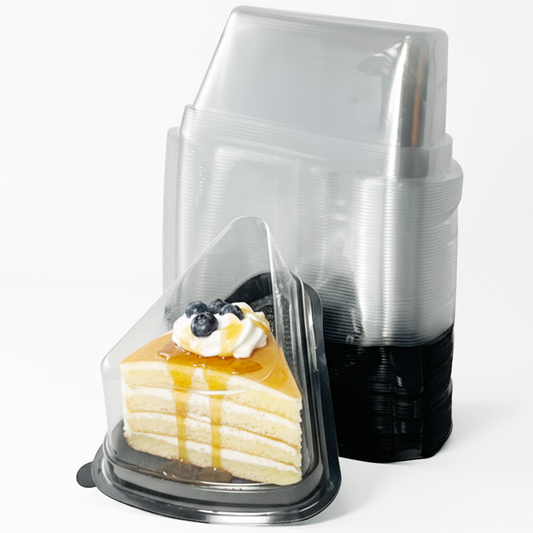
Double Wave’s clear cake slice containers measure 5.4 by 4 by 2.5 inches. They fit a standard slice from a 9-inch round cake. Each set has 50 BPA-free containers with clear lids and stackable bases. Once the box fits, the label can be sized without hiding the cake it describes.
Product Labels
Most labels begin with the product name and ingredients. Local rules may also require business details or a cottage food statement.
Major allergens need plain names. The FDA says a Contains statement must name each major allergen used. Its food allergen labeling guidance explains the federal approach.
The statement helps customers but does not replace cross-contact controls. With the label ready, attention can move to freshness.
Freshness During Travel
Cake should cool before packing because trapped warmth creates moisture that can harm the frosting. A close-fitting box limits movement and moisture loss. Still, an airtight lid cannot make a perishable cake safe at room temperature.
Cold items need a cooler for reserve stock. Ice packs and a thermometer support the local temperature limit.
Heat may harm the appearance first. Shade and a covered display protect buttercream or chocolate from direct sun. Reserve packages can stay in approved cold storage until the display begins to empty.
Booth Display and Payments
Once the slices arrive safely, the table should explain the menu. A board shows prices, while smaller cards connect each flavor with its cake. Risers make the display easy to see from the aisle. The point-of-sale system can sit at the end, so buyers choose before paying.
Several payment options can save a sale. A backup battery and early signal test help prevent payment trouble. Samples may attract interest but can create extra food duties. Once the organizer explains the rules, the sales talk can stay short.
Repeat Customers
Once someone enjoys a slice, the sale can lead to a return visit. A friendly hello and quick flavor suggestion start that relationship without slowing the line. A QR code can lead to preorders, while a card shares the next event date. Both make the bakery easy to find again.
That first purchase may lead to a whole-cake order because the buyer already knows the flavor. Shopper questions may reveal a missing flavor or size. Still, paid orders matter more than praise when planning the next menu.
By closing time, the baker has more than an empty display. The event has produced sales data that can shape the next market.
Results After the Market
That review begins with a table that places starting stock beside sales. Leftovers and revenue can share the same row. Gross sales may look exciting, but they do not show profit. Net profit removes labor plus product and event costs.
Leftovers tell another part of the story. Safe slices may suit a later legal sale, while cake with an uncertain temperature history should leave the stock. Together, these details reveal patterns. A slow flavor can shrink, while a steady seller earns more space next time.
The review also shows which supplies ran short or came home untouched. That shapes the next packing list.
Market Day Supply List
A market list should grow from the sales review. This leaves extra items at home without forgetting important tools.
-
Legal papers
-
Vendor approval
-
Food permits
-
Tax and insurance proof
-
Booth supplies
-
Table cover and business sign
-
Price cards and display risers
-
Tent weights and cleaning supplies
-
Sales supplies
-
Charged card reader
-
Cash and change
-
Phone charger and QR code menu
-
Food supplies
-
Labeled stock and extra containers
-
Napkins and reserve boxes
-
Cooler and approved cold gear
The list should match the event. An indoor pop-up may not need a tent, while a summer market may need more cold-storage tools. Once the supplies match the venue and menu, the plan is ready. A few business questions may still come up before the first sale.
Frequently Asked Questions
These questions often appear before a baker books the first market or plans the wider business. The answers cover points that the main guide has not already explained.
How Far Ahead Can Cake Slices Be Prepared?
For quality, many plain cake layers can be baked one or two days ahead or frozen sooner. Slicing and packing closer to the event limits drying. Perishable fillings still need the cold storage required by local rules.
Do Cake Slices Need a Nutrition Facts Label?
Some small food businesses may qualify for an FDA nutrition labeling exemption. State cottage food rules can still require other label details. The baker should confirm the exact rules with the proper state or federal authority.
Can Cake Slices Be Sold Online Between Markets?
Maybe. Some states allow online orders when the baker delivers each order straight to the buyer. Other states set tighter limits. The local cottage food agency can explain which sales and delivery methods are legal.
Can Someone Else Run the Market Booth?
Rules differ by state. Some programs let an employee or family member sell the food. Others require the cottage food operator to be present. The permit office and market manager can confirm who may staff the booth.
Can Cake Slices Be Sold Through a Coffee Shop?
Possibly. Many cottage food laws allow only direct sales to the final customer. Wholesale sales to a café or shop may need a different permit and an approved kitchen, so local rules decide the answer.
Is an LLC Required to Sell Cake at a Market?
An LLC is not always required for a market stall. It may separate business and personal assets in some cases. A local business adviser or lawyer can explain which structure fits the bakery and its risk.
Turn Your Best Cake Into a Market-Ready Slice
A market plan starts before the table opens. Local rules guide the menu while costs shape the price and stock target. Clear packaging protects each portion and helps customers see the layers. A neat booth makes flavors and prices easy to compare.
Sales records show which cakes sold and which cakes came home. Those facts can guide the next batch and reduce food waste. The first event does not need a large menu or a packed table. A few well-made flavors can give the baker useful data without tying up too much cash.
Selling cake by the slice now starts with a better plan and cleaner display. The Double Wave cake slice containers can help each portion travel well. Every slice can arrive neat and ready to impress.