How to Reheat Leftovers Without Drying Them Out
Reheating leftovers can turn good food sad. Rice becomes hard while chicken turns rubbery. Pizza loses its crisp base.
Too much heat or too little moisture often causes the problem. Learning how to reheat leftovers without drying out starts with both factors. Portion size matters too.
This guide gives each food a method. People microwave leftovers for speed. It shows when an oven or air fryer gives better texture.
The Formula for Better Leftovers
Better leftovers depend on three simple controls. The food needs suitable heat and enough moisture. It also needs only as much time as the portion requires.
- Moderate heat + suitable moisture + short heating time = better texture
Dry foods benefit from a little water or broth. Sauced dishes may need extra sauce. A cover traps steam.
Short intervals limit hot edges and cold centers. Stirring spreads heat through the portion. A brief rest lets that heat settle.
Crispy food needs dry moving heat. An oven or air fryer protects its surface better than a covered microwave. Storage changes explain how these steps keep leftovers moist.
Why Leftovers Dry Out
Cold storage changes water and food structure. Reheating then adds another round of heat. The final texture depends on how starch and protein react during both stages.
Moisture Escapes
Water moves from food into the air during storage. A loose lid lets more moisture escape. High heat can remove even more during reheating.
Thin edges may dry before a center becomes hot. A microwave cover helps prevent food from drying out.
Starch Becomes Firm
Cooked starch changes as it cools. Rice becomes firm while pasta can feel stiff. Bread may feel dry even when water remains inside it.
Moist heat softens many starchy foods. A little water creates steam around rice. Extra sauce coats pasta as the noodles warm.
Protein Tightens
Protein responds fast to excess heat. Chicken fibers tighten and release moisture. Steak can become tough while its center stays cold.
Lower power gives heat more time to spread. Sauce or broth can protect the surface. These causes now connect to one reheating method.
Heat, Moisture, and Time
Every leftover has its own balance. Moist soup behaves differently from fried chicken. Three small choices set the right balance before the appliance starts.
Match the Heat
Lower heat suits dense food and cooked meat. It warms the center with less stress on the edges. Medium microwave power can help chicken and steak stay tender.
Soup can handle stronger heat with regular stirring. Dry heat can restore pizza or roasted vegetables. The texture goal sets the better level.
Replace Lost Moisture
Water works well for plain rice and steamed vegetables. Broth adds moisture to chicken without hiding its flavor. Gravy can protect sliced beef or turkey.
Pasta often needs a spoonful of sauce. Too much liquid makes noodles soggy. A small amount creates steam without flooding the plate.
Control the Time
Small portions warm faster than deep bowls. Short intervals stop heat before the edges overcook. Each pause creates time to stir or turn the food.
Microwave wattage changes the best time. Portion size and food density change it too. Those details matter most inside a microwave.
How to Reheat Leftovers Without Drying Out in a Microwave
Microwave reheating can keep food moist when the setup fits the meal. Container shape and microwave power level affect heat distribution. Covers and short intervals control moisture loss.
Make a Shallow Layer
A shallow layer helps heat reach the whole portion. Thick piles can hide a cold center under hot food. Wide microwave-safe containers suit many meals better than deep bowls.
Similar pieces also heat at a closer rate. Thick meat can sit near the plate edge. A small center gap may improve even heating.
Add the Right Liquid
Some cooks add water to dry rice. Others add sauce to pasta. They may add broth to chicken.
Food should look lightly damp instead of wet. Too much water weakens flavor and makes starch soggy. Its original moisture level sets the amount.
Cover the Food
A vented lid can cover food and trap steam. A loose microwave-safe lid gives the same help. Its vent gives extra steam a path out.
A damp paper towel can cover rice or bread. Its package should state microwave-safe use. Printed towels may not suit direct food contact.
Lower the Power
Full power can make the outside race ahead of the center. Medium power sends energy in shorter cycles. Those pauses help heat move through dense food.
Many microwaves call this level 50% or medium. Meat and casseroles often respond well. Soup can take more power with regular stirring.
Pause and Move It
Short intervals give more control than one long cycle. A first interval may last 30 to 60 seconds. Large portions may need longer blocks.
Stirring moves hot food toward cool areas. Turning meat warms both sides. A one-minute rest can reveal a cold center.
The basic microwave steps now have a clear order. Food type decides the final choice of moisture and method.
Reheating Guide by Food
Each food starts with a different moisture level and texture goal. Soft foods often need steam. Crisp foods need surface heat that lets extra moisture escape.
|
Food |
Moisture Helper |
Good Method |
Texture Goal |
|
Rice |
Water |
Microwave or stovetop |
Soft grains |
|
Pasta |
Sauce or water |
Microwave or stovetop |
Moist noodles |
|
Chicken |
Broth or gravy |
Microwave or oven |
Tender meat |
|
Steak |
Broth or sauce |
Low-power microwave or pan |
Warm center |
|
Pizza |
None |
Skillet, oven, or air fryer |
Crisp base |
|
Soup |
Usually none |
Microwave or stovetop |
Even heat |
|
Casserole |
Sauce or water |
Covered microwave or oven |
Moist center |
|
Vegetables |
Small splash of water |
Microwave or stovetop |
Tender pieces |
|
Fried food |
None |
Air fryer or oven |
Crisp coating |
Reheat Rice
Leftover rice often becomes firm in the fridge. A small splash of water creates fresh steam. A cover keeps that steam near the grains.
A fork can separate clumps after the first interval. The rice then heats more evenly. Its center still needs to become hot throughout.
Reheat Pasta
Sauced pasta loses moisture as noodles absorb liquid. Extra sauce restores flavor and water. Plain pasta can take a small splash instead.
A shallow layer reduces cold spots. Stirring coats the noodles again. Medium power may also stop a cream sauce from separating.
Reheat Chicken
Chicken dries fast under strong heat. Slices warm more evenly than one thick piece. Broth or gravy protects their exposed surfaces.
A covered dish holds steam near the meat. Medium power offers more control. An oven better suits bone-in portions or crisp skin.
Reheat Steak
Steak needs gentle heat because it is already cooked. Thin slices shorten reheating time. Beef broth or sauce helps retain moisture.
A covered pan can warm slices over low heat. Medium-low microwave power suits a small portion. A quick pan finish can restore surface color.
Reheat Pizza
Microwave steam can soften pizza crust. A skillet warms the base while a lid melts the cheese. Water can sit beside the slice and not on it.
An oven or air fryer suits several slices. Dry heat restores crisp edges. Moderate heat warms the cheese before the crust burns.
Reheat Soup
Soup already contains plenty of water. Uneven heating causes more trouble than dryness. A deep center can stay cool under a hot surface.
Regular stirring spreads heat through the bowl. A loose cover limits splashes. Thick soup needs extra care because cold spots can hide below.
Reheat Casseroles
Casseroles often combine dense layers with a dry top. Sauce or water can help one serving. A cover stops the edges from hardening too early.
Large portions suit a covered oven dish. Small pieces warm faster in a microwave-safe container. The center sets the total time.
Reheat Vegetables
Steamed vegetables need only a small splash of water. A short covered cycle can keep them tender. Too much time turns soft vegetables limp.
Roasted vegetables need dry heat instead. An oven or air fryer restores browned edges. Added water works against that goal.
Reheat Fried Food
Fried food stores moisture inside its coating. A microwave can draw that water toward the surface. A cover traps even more steam.
An air fryer or oven lets surface moisture escape. Space between pieces improves airflow. These food choices now point toward the best appliance.
Match Method to Texture
No single appliance suits every leftover because moisture and texture set the better method. Portion size then affects time. This table connects each appliance with the food qualities it handles best.
|
Appliance |
Best For |
Main Control |
|
Microwave |
Moist food and small servings |
Cover, lower power, and stir |
|
Oven |
Dense casseroles and large portions |
Moderate heat and foil |
|
Stovetop |
Soup, curry, rice, and sauced pasta |
Low heat and stirring |
|
Air fryer |
Pizza, fries, and breaded food |
Dry airflow and open space |
The microwave saves time while the oven protects dense portions. The stovetop gives direct control while an air fryer restores crisp surfaces. Available space becomes the next issue when more than one plate needs heat.
Reheat More Plates
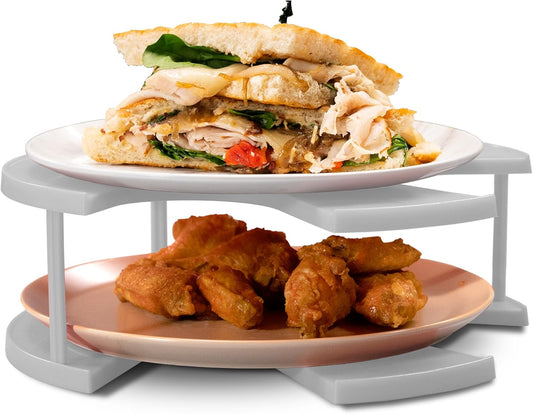
Family meals may involve several different portions. One plate may hold rice while another has chicken. Plate size and microwave capacity then affect the plan.
A microwave plate stacker for multiple dishes can create another level inside the appliance. The DoubleWave model is microwave-safe and BPA-free. It fits plates up to 10.5 inches wide.
The product page recommends two or three plates based on available space. Microwave size should still fit the stand and plates without contact with the walls. Different foods may also finish at different times.
Similar portions work best together. A bowl of soup may need a separate cycle from a pizza slice. Safe reheating matters even when the setup saves space.
Keep Leftovers Safe
Good texture cannot replace food safety. Storage time and internal temperature matter before the first bite. Thick food also needs care because cold spots can hide inside it.
Refrigerate Food Promptly
Perishable leftovers should enter the refrigerator within two hours. Hot food can move into shallow containers for faster cooling. The refrigerator should stay at 40°F or below.
Most cooked leftovers keep for three to four days. Freezing extends storage life but texture may change. A date on the container helps track that window.
Reach 165°F
Reheated leftovers should reach 165°F or 74°C. The official USDA leftovers and food safety guidance also advises covered microwave reheating with rotation for even heat.
A food thermometer gives better proof than touch. The probe should enter the thickest or coolest area. Several spots may need a reading in a large portion.
Remove Cold Spots
Microwaves can leave cool areas beside very hot ones. Stirring and turning move food through different heat zones. A short covered rest lets the temperature spread further.
Only the needed portion should leave the refrigerator. Repeated heat cycles lower food quality and create more handling. Several common errors can cause the same texture loss.
Mistakes That Dry Food
Small errors often cause the worst results. The table links each problem to its likely effect. It also gives a simple change for the next meal.
|
Mistake |
Likely Result |
Better Choice |
|
Full power for too long |
Dry edges |
Medium power and short intervals |
|
No cover |
Lost steam |
Vented cover or loose lid |
|
Too much water |
Soggy food |
One small splash |
|
Deep container |
Cold center |
Wide shallow layer |
|
Crowded portion |
Uneven heat |
Smaller portions |
|
Microwave for fried food |
Soft coating |
Oven or air fryer |
|
No rest time |
Hidden cold spots |
Brief covered rest |
The goal is not the fastest possible cycle. The better target is even heating with the least texture damage. A few final questions cover the remaining details.
Frequently Asked Questions (FAQs)
Food type answers most reheating choices. A few cases depend on the appliance or storage history instead. These short answers cover those extra points.
Can Leftovers Be Reheated More Than Once?
Safe storage and a full return to 165°F still matter after each cycle. Yet quality drops as heat removes more moisture. Smaller portions allow the rest of the food to stay cold until needed.
Should Cold Food Sit Out Before Reheating?
Long counter time adds food-safety risk and is not needed. Most leftovers can move from the refrigerator into a suitable appliance. Thick frozen food may need safe thawing before even reheating.
Can Aluminum Foil Go in a Microwave?
Metal can cause sparks and damage inside a microwave. Foil suits a standard oven instead. Microwave-safe glass or ceramic offers a simpler container choice for most leftovers.
Does Microwave Wattage Change Reheating Time?
Yes. A high-watt microwave can heat the same portion faster than a low-watt model. Short first intervals help reveal how quickly a specific appliance warms that food.
Which Containers Are Microwave-Safe?
The container label should clearly state microwave-safe. Heat-safe glass and ceramic often work well. Cracked dishes or containers with metal trim should stay out of the microwave.
Can Frozen Leftovers Reheat Without Thawing?
Some frozen leftovers can reheat safely without full thawing. They will need more time and careful stirring. Large frozen blocks may heat more evenly after refrigerator thawing.
Make Leftovers Taste Better
Better reheating starts with the food in front of you. Rice needs steam while pizza needs dry heat. Chicken and steak benefit from lower power plus a little broth or sauce.
Portion size sets the time. A cover controls moisture while stirring spreads heat. A thermometer confirms that the coldest part has reached a safe level.
This guide on how to reheat leftovers without drying out gives every step a clear reason. The right method can reheat food while protecting flavor and texture. It can also help reduce food waste.
DoubleWave can make multi-plate microwave meals easier to arrange. Each plate still needs the right moisture and time. That simple care can make last night’s food taste good again.