15 Buffet Table Setup Ideas for Small Spaces
You set the lasagna down, and the line already jams at the door. Guests bump elbows while reaching across a packed little table. Cramped rooms turn a simple buffet into a traffic snarl.
Most hosts pile every dish onto one crowded surface. Plates and drinks fight for the same few inches. So the line stalls and the food gets cold fast.
We pulled together these buffet table setup ideas for tight rooms. Hosts across the USA serve crowds in small apartments every week. You fix the jam with smart placement and one clear path.
First comes why a tight room changes the whole setup. One console or a cart can serve as the table. What you place first decides how the line moves.
Why Small Spaces Change the Buffet Table Setup
Small spaces change the buffet because there is no room to spread out. One crowded table forces guests to reach over each other. Tight doorways and chairs block the path to the food.
Guest flow matters more in a small dining room with ten guests. One packed surface slows every plate down the line. So you spread the food across more than one spot.
Vertical space stays open even when the table fills up. Stacking food upward frees the flat surface for plates.
Build Upward to Free Buffet Table Space
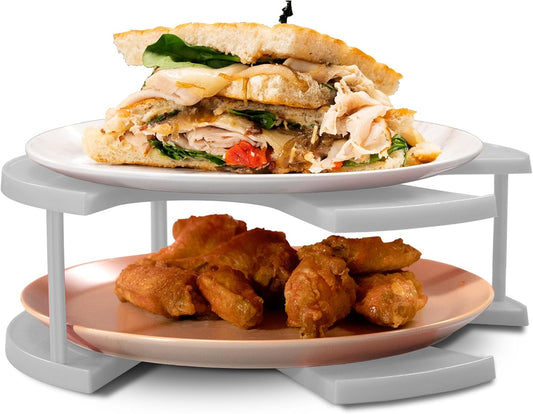
Building upward frees flat table space for more food. One tiered food display holds two plate layers in one footprint. Height lets a 12-inch spot serve as much as two.
Buffet risers lift appetizers above the dips and bowls. You can stack two plates on a folding food display stand at once. That two-tier stand folds flat for storage after the party.
Cake stands and small risers add the same lift. Vertical serving space doubles what one narrow table holds. Height sorted, you move on to the table itself.
15 Buffet Layouts That Work in a Small Room
These 15 buffet table setup ideas fit tight rooms and small tables. Each idea solves one part of the small-space problem. You mix the ones that match your room and menu.
Some ideas pick the serving surface for a tight spot. Others set the guest flow and the party layout. You can use five ideas or all fifteen at once.
We group the surface picks before the flow and food tips. Idea one starts with the simplest space fix of all. Wall placement gives you the easiest small buffet to run.
1. Push the Buffet Table Against a Wall
Wall-side tables open the floor for guests to pass. Guests serve from one side and never block a path.
This wall buffet keeps the room center clear for standing. You skip the crowding that a center table always causes. You line the wall side with the serving pieces first.
2. Use a Narrow Console as the Serving Surface
Narrow console tables fit a buffet along a short wall. Most consoles sit about 12 inches deep as a narrow serving table.
This small buffet setup holds plates and two main dishes. You store it against the wall after the guests leave.
3. Turn a Bar Cart Into a Rolling Buffet
Bar carts roll the food wherever the room has space. Two shelves make an appetizer station on top and plates below.
This bar cart buffet moves out of the way after dinner. You push it to a corner once the line clears.
4. Borrow the Kitchen Island for the Main Dishes
Kitchen islands work as a buffet with open sides. Guests reach the food from two or three sides at once.
You clear the counter and set the hot dishes there. Island counters keep the food near the stove and sink. Guests circle the island without blocking the kitchen flow.
5. Set One Clear Direction for the Buffet Line
One clear direction keeps the buffet line from tangling up. Guests start at one end and exit at the other.
This one-way serving flow stops two people meeting head-on. One good buffet table layout points everyone the same way.
6. Put a Stack of Plates at the Start
Plates belong at the very start of the buffet line. Guests grab a plate before they reach any food.
One stack of plates at the front stops backups. You keep the pile low so it never tips over. Two short stacks beat one tall, unstable tower.
7. Place Utensils and Napkins at the End
Napkins and cutlery go at the end of the line. Guests grab them last so their hands stay free.
Serving utensils stay next to each matching dish instead. You free their hands for the plate until the end.
8. Group Foods by Course, Not by Dish
Grouping foods by course keeps the buffet line moving. Salads come first and the mains follow close behind.
Smart buffet food arrangement groups similar dishes side by side. You keep hot dishes apart from the cold ones.
9. Serve on Large Platters to Save Room
Large platters hold more food in less table space. One serving platter beats three small bowls for the mains.
This buffet food arrangement cuts the number of dishes out. You refill one platter instead of swapping many bowls.
10. Add Mini Bowls for Dips and Toppings
Mini bowls hold dips and toppings without spills. Small bowls stack near the dish they belong to.
This buffet table layout keeps sauces off the main plates. You group each topping beside its matching food.
11. Move Drinks to a Separate Station
Drinks belong at a separate station away from the food. One side table or counter holds cups and a pitcher.
This separate drink station stops the worst buffet traffic. You place it across the room so lines never cross. Guests refill drinks without crossing the food line.
12. Give Dessert Its Own Small Table
Desserts work best on a small dessert table of their own. One coffee table or stool holds the sweets apart.
This dessert display opens after the main plates clear. You keep cakes off the crowded main buffet surface.
13. Add Food Labels So Guests Serve Fast
Food labels help guests pick dishes without asking you. Small cards name each dish and flag the allergens.
Clear labels speed the line and cut the questions. You write them big so guests read from a step back. Guests with allergies scan the cards without asking around.
14. Keep One Clear Walking Path Open
One clear walking path keeps guests moving around the room. You leave about three feet between the table and chairs.
Blocked doorways cause the worst small-space buffet jams. Good compact entertaining protects the path to the exit.
15. Plan a Trash and Dish-Return Spot
One trash and dish-return spot stops the buffet pileup. Guests drop used plates there instead of on the table.
This easy cleanup spot stays near the kitchen door. You line a bin and set a tray for dirty forks. One second bin near the door holds the recycling.
Where to Place Food, Plates, and Drinks
Smart buffet table setup ideas put each item in its own zone. Plates start the line and napkins end it. Food fills the middle in course order.
Drinks and dessert move to their own spots nearby. This small buffet setup follows one simple order. Our chart below shows where each item belongs.
|
BUFFET SPOT |
WHAT TO PLACE |
REASON |
|
Start of line |
Stack of plates |
Guests grab a plate first |
|
Middle |
Mains and sides by course |
Keeps the food order clear |
|
End of line |
Napkins and cutlery |
Frees hands until the end |
|
Separate spot |
Drinks and cups |
Stops the worst crowding |
|
Side table |
Dessert and coffee |
Opens after dinner clears |
Each zone keeps one job and avoids the crowding. You walk the route once before the guests arrive. One quick rehearsal shows the jams before they happen.
A Quick Buffet Rehearsal Before the Party
One short rehearsal finds the jams before guests arrive. You walk the line with an empty plate yourself. Tight turns and blocked chairs show up right away.
You move one dish if your elbow hits the wall. Measuring three feet of path keeps the exit open. One test run takes five minutes and saves the night.
You set the plates and check the reach to each dish. Short guests should still reach the back platters fine. Good serving pieces keep that smooth run going strong.
Serving Pieces That Fit a Small Buffet
Compact serving pieces hold more food in less space. Tall stands and wide platters beat many small bowls. Folding pieces store flat once the party ends.
Each surface works best with a matching serving piece. One two-tier stand adds height on a short console. Our chart below matches each surface to a serving piece.
|
SMALL SURFACE |
SERVING PIECE |
WHAT IT HOLDS |
|
Narrow console |
Two-tier folding stand |
Appetizers and desserts |
|
Bar cart |
Stacking trays |
Snacks and small plates |
|
Side table |
Cake stand or riser |
Cupcakes and sweets |
|
Kitchen island |
Large platters |
Main dishes and sides |
|
Folding table |
Mini bowls and labels |
Dips and toppings |
Each piece folds or stacks for easy storage later. You pick two or three that fit your surfaces. Your menu matters as much as the serving pieces here.
Plan a Small-Space Buffet Menu That Fits
Short menus fit a small buffet better than a big spread. Fewer dishes mean fewer bowls fighting for table space. You pick four or five dishes for a tight room.
Finger foods skip the need for forks and large plates. Make-ahead dishes free the oven on the party day. One-bite appetizers move the line faster than plated meals.
You count about six bites per guest for a two-hour party. Cold dishes hold up longer than hot ones on a small table. Repeat slip-ups still crowd a small buffet, though.
Common Small-Space Buffet Mistakes to Avoid
Common mistakes crowd a small buffet and stall the line. Most come from one packed table or a blocked path. Our list below flags the errors that jam a room.
-
Piling every dish onto one small table.
-
Leaving drinks on the main food surface.
-
Blocking the only doorway with a chair.
-
Setting plates behind the food, not in front.
-
Skipping labels that slow the whole line.
-
Forgetting a spot for used plates and trash.
Each slip packs the room and slows every guest. Spreading food and clearing the path fixes most of them. Beginners run into a few doubts about small buffets.
Frequently Asked Questions (FAQs)
People ask a few common questions about small buffets. Each reply below gives one quick, usable answer.
How do you set up a buffet table in a small space?
You push the table to a wall and set it up in one direction. Plates go first, and drinks move to a side spot.
What goes first on a buffet table?
Plates go first so guests grab one before the food. Napkins and cutlery wait at the line’s exit point.
How do you keep a small buffet line from getting crowded?
One clear direction and a separate drink station cut the crowding. You leave three feet of open path around the table.
Where should drinks go at a small party?
Drinks go at their own station across from the food. One separate spot keeps the two lines from crossing.
How do you use a tiered stand for party food?
Tiered stands hold two plates in one small footprint. You put appetizers up top and dips on the base.
Can you set up a buffet in a tiny apartment?
Yes, a console or cart serves as the buffet surface. You spread drinks and dessert to other small tables.
How do you keep a small buffet easy to clean?
You set a trash and dish-return spot near the kitchen. Guests drop used plates there instead of the table.
What is the best surface for a small buffet?
Narrow consoles and kitchen islands work best for most rooms. Both serve food without blocking the walking path.
How many dishes should a small buffet have?
Four or five dishes fit a small buffet without crowding. You add one dessert and a drink station apart.
Can you host a holiday dinner in a small apartment?
Yes, a wall buffet and a bar cart handle a holiday crowd. You spread drinks and dessert to other small surfaces.
How do you add height to a small buffet table?
Tiered stands and cake risers add height in one footprint. You stack appetizers up top and dips below.
What serving pieces save the most space?
Folding stands and wide platters save the most table space. Both hold more food than a row of small bowls.
Hosting a Small-Space Buffet With Room to Spare
These buffet table setup ideas turn a tight room into a smooth party. You pick the surface and set one clear direction. Spreading drinks and dessert keeps the main line fast.
Plenty of USA homes serve crowds in small apartments with ease. You match the table and stands to the space you have. One quick rehearsal catches the jams before the first guest.
Vertical stands and a wall table handle most of the setup. Most small USA kitchens host a buffet smoothly without the crowding. You set it once and then guide the line all night.